Timeless Caithness Stone, Shaping Iconic Spaces
By: Norse Stone
Arguably one of Scotland’s most recognisable castles, Eilean Donan’s rich history makes it a popular destination for both domestic and international visitors alike. Originally built in the 13th century it became a strong hold for the Clan Mackenzie and their allies until, as a result of the Mackenzie’s involvement with the Jacobite’s, it was destroyed in 1719 by a gunpowder explosion laid by government forces. It lay in ruins until the early 1900’s when it underwent 20 years of reconstruction including building an arched bridge from the mainland to the island the castle was built on.
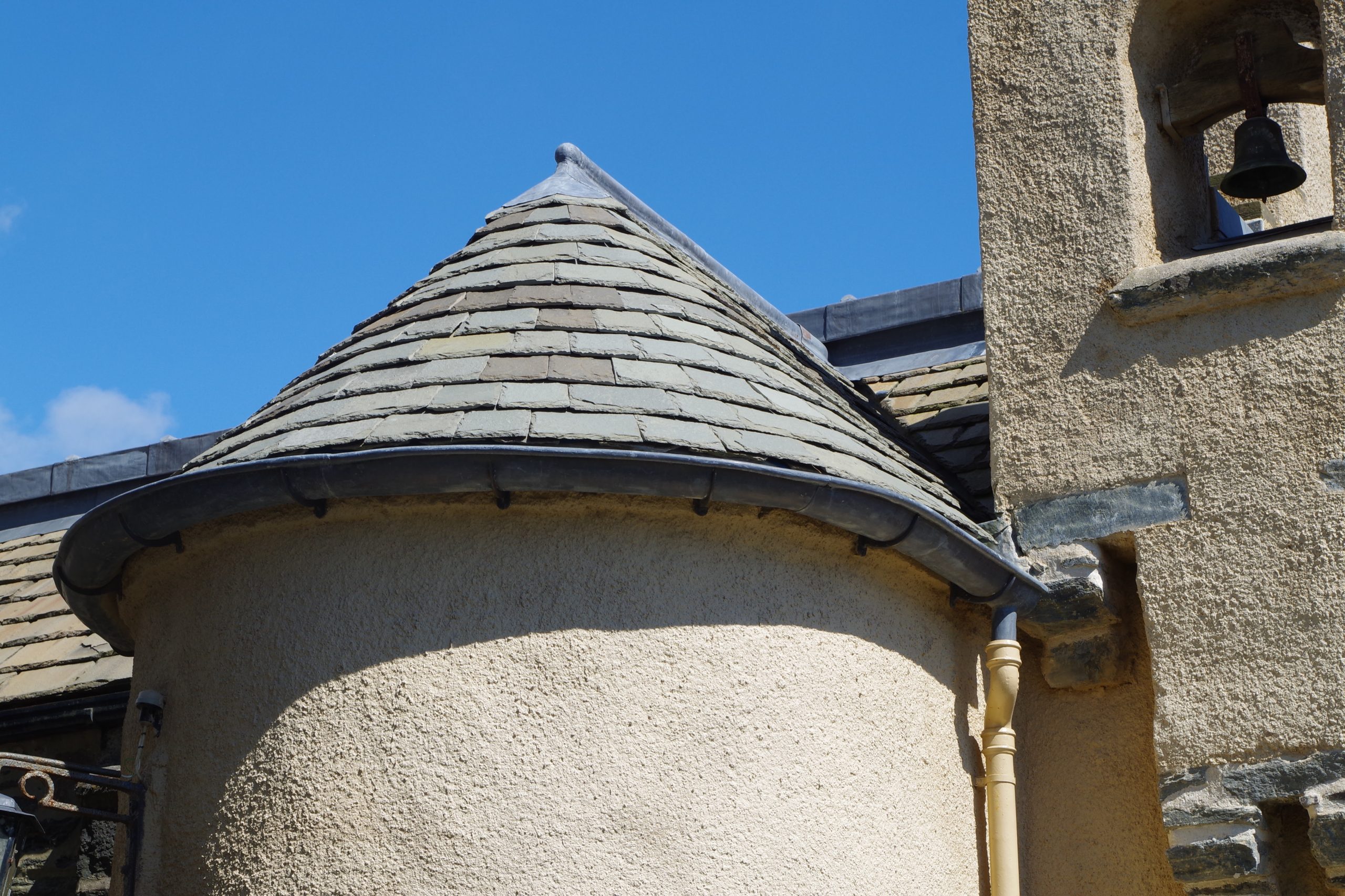
After opening to the public, the restoration of Eilean Donan Castle has continued alongside improvement of its facilities as visitor numbers grow. A challenge with any restorative based project, but particularly an A-listed one, can by finding matching materials or ones which are sympathetic and complementary to what is already in place. When Eilean Donan Castle was first rebuilt, it was decided to use Caithness flagstone for the roofing slates. This material was highly regarded for its natural strength, durability and versatility and it was widely used for paving, flooring, roof slates and building stone. When modern restoration works were required on one of the castles tower roofs, Caithness flagstone was once again used.
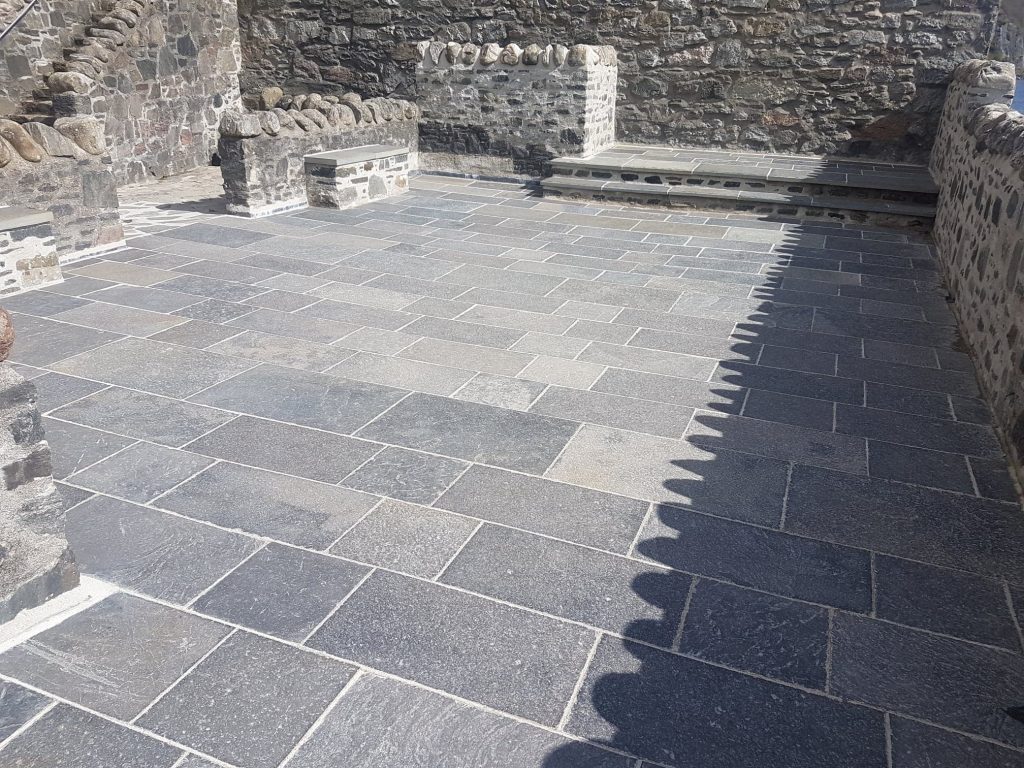
Extracted and manufactured from their quarries in Caithness, Norse Stone Ltd produced the new diminishing roof slates in the traditional formats and sizes with hand finished edges. Although initially grey in colour when first extracted, as the slates naturally weather they perfect complement the surrounding Caithness lined roofs of the castle. Further restoration works were also undertaken in the castle courtyard, a popular area with visitors and for holding events, it required the combination of a complementary aesthetic and high durability which Caithness flagstone paving were able to offer.
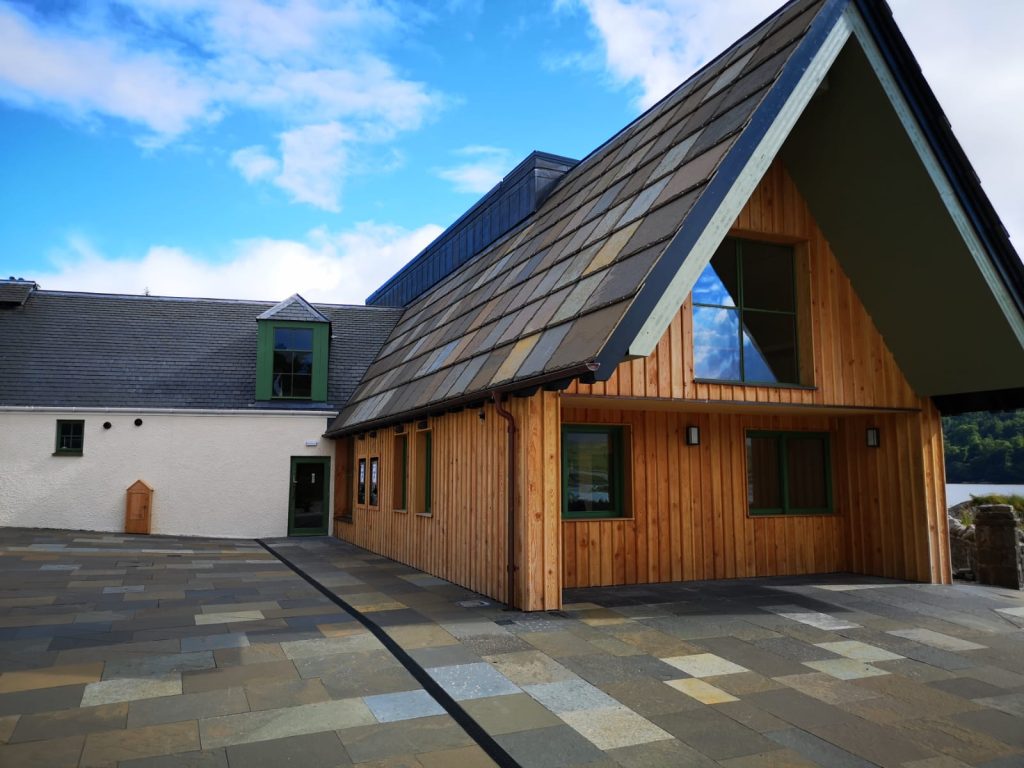
As the Castle’s popularity has grown, so too has the need for visitor facilities. An extension to the existing visitor centre was built which, although of a more modern design, remained connected to castle with the use of materials including Caithness flagstone. Almost 300m2 of flagstone paving in an open colour palette, a mix of both grey and weathered tones was used around the new visitor centre as well matching large format roof tiles. Whilst, inside, Caithness flagstone worktops provide a practical surface for use in the visitor centres catering and takeaway area.
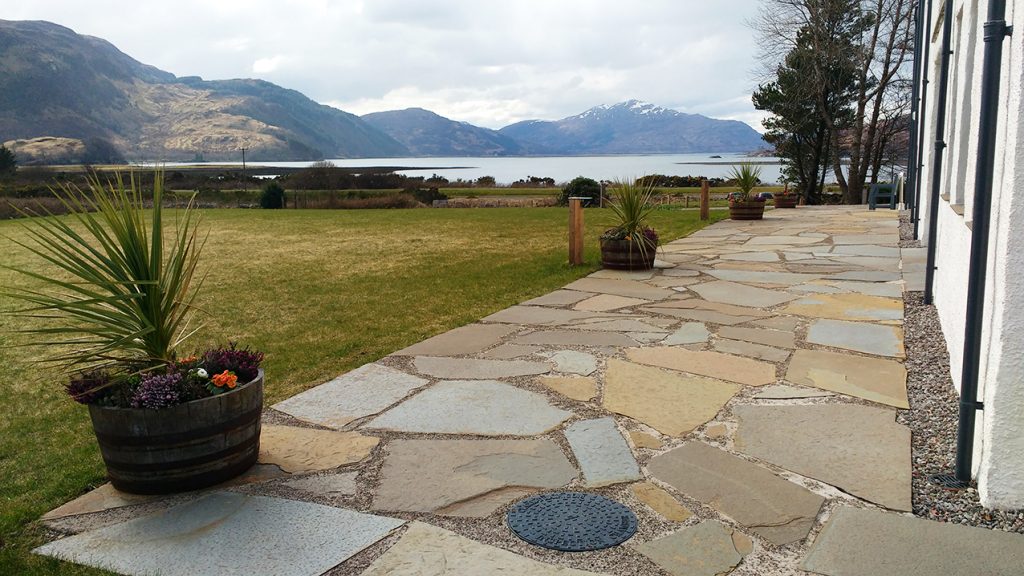
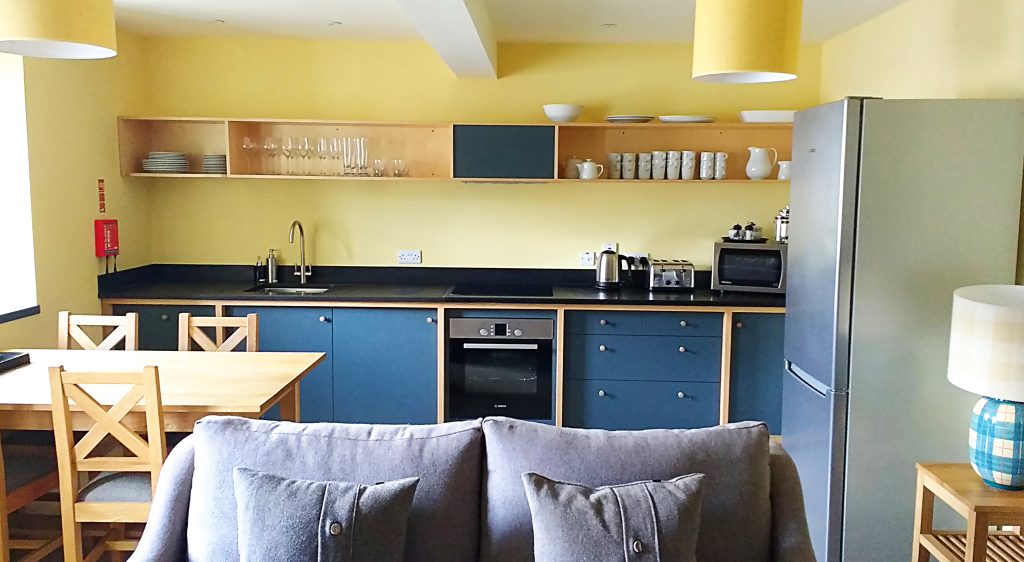
Nearby, visitor holiday apartments overlooking the castle continue the connectivity through materials. Caithness flagstone crazy paving surrounds the apartment buildings which also features flagstone sills. Additionally, the apartments benefit from fitted Caithness worktops bespoke made with hob cuts, sink cut outs and drainer grooves, each made to suit the individual spaces.
Whether in the historic castle, its modern visitor centre or comfortable apartments, the broad range of sizes, colours and types of Caithness stone products used provides a sense of both individuality as well as cohesion across these different areas, providing a unique link from one to the next.
We are proud to feature and promote in our architecture magazine Eilean Donan Castle, a Scottish icon of history.