Reimagining Cancer Care Through Design
By: HLM Architects
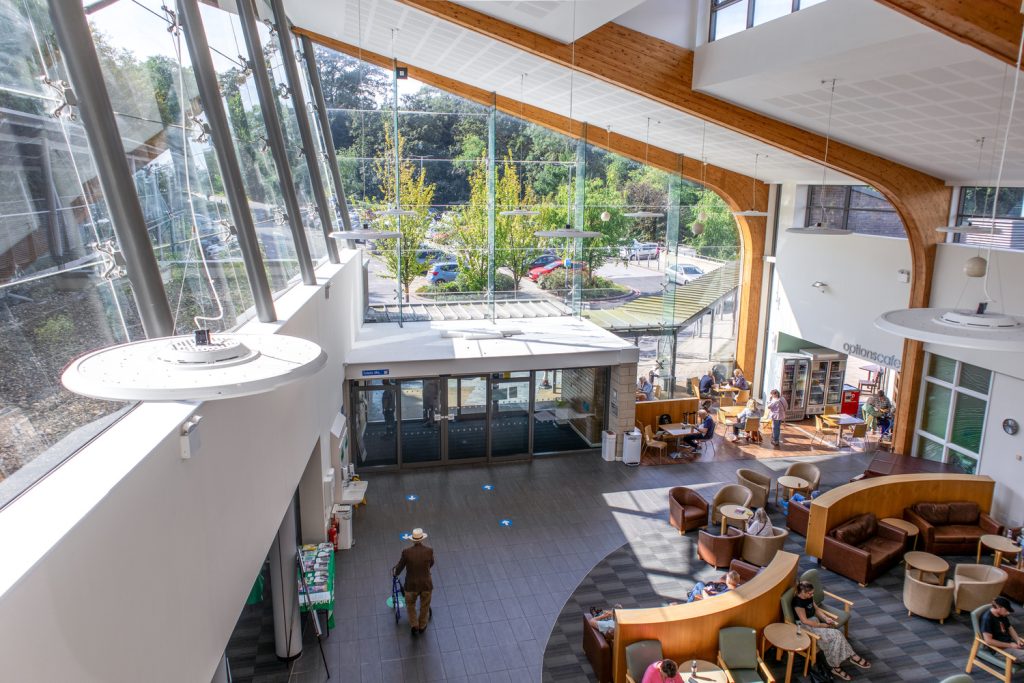
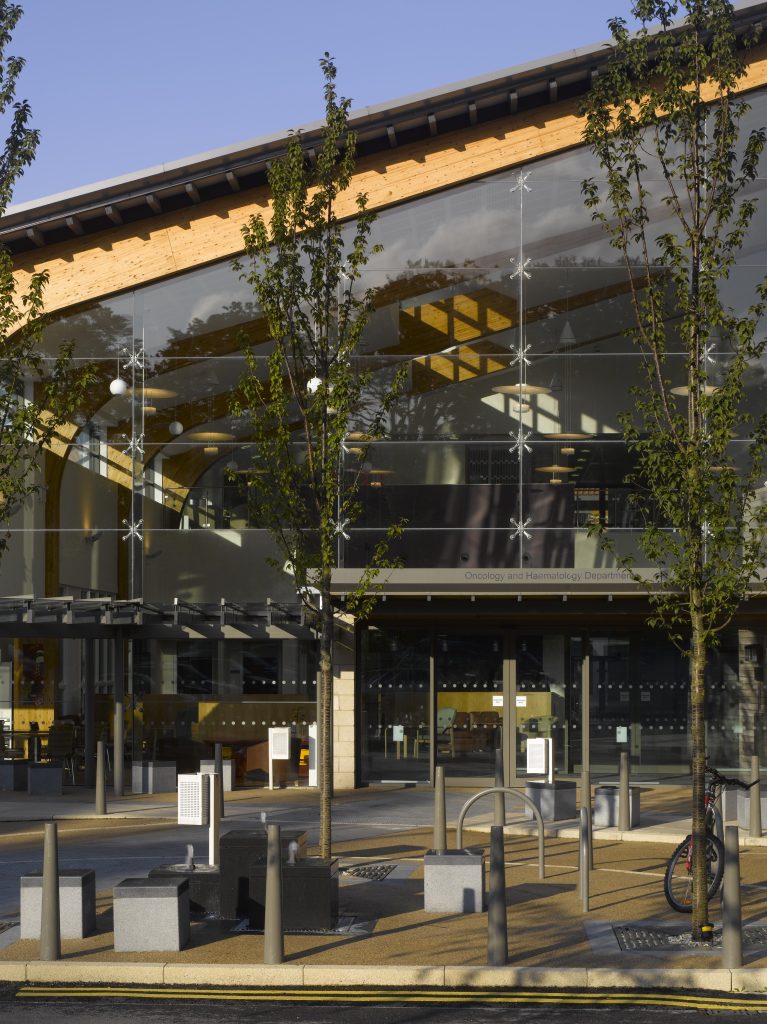
Hull Oncology, the regional Cancer Centre at Castle Hill Hospital, represents a significant step forward in healthcare for Humberside and North Lincolnshire. Bringing together cancer and haematology services under one roof, the centre combines state-of-the-art clinical facilities with an environment designed to uplift and support both patients and staff.
The brief called for a highly complex set of functions, including six linear accelerators, a day hospital, Outpatients facilities, 100 beds across four floors, as well as Pathology, Pharmacy and Medical Physics. The heart of the scheme is the idea of connection: to nature, to art, and to one another.
Designing with the Landscape
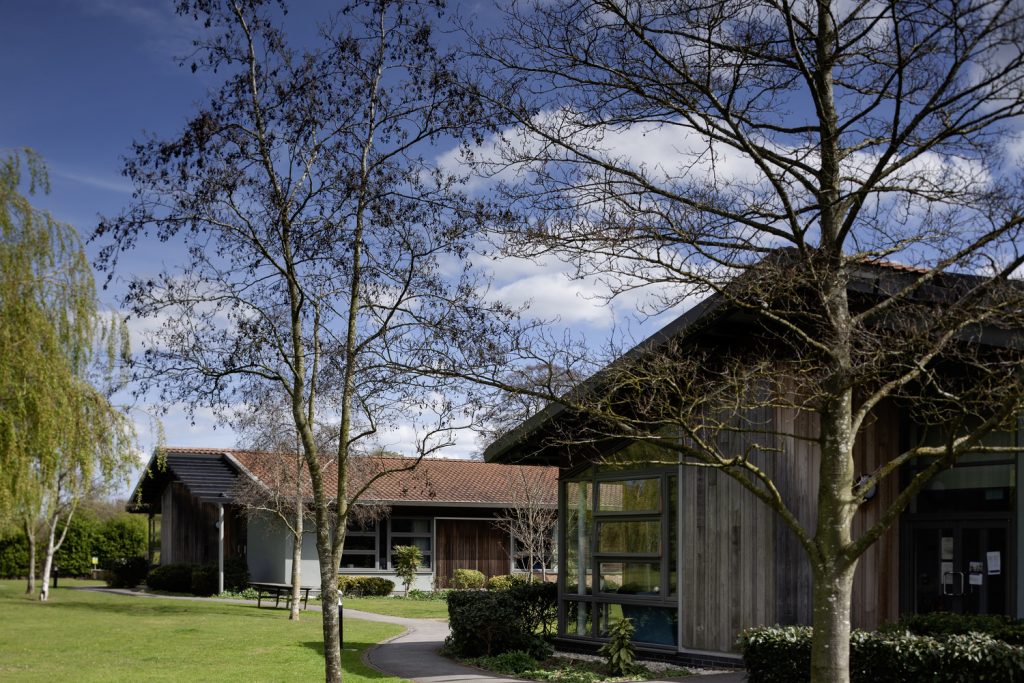
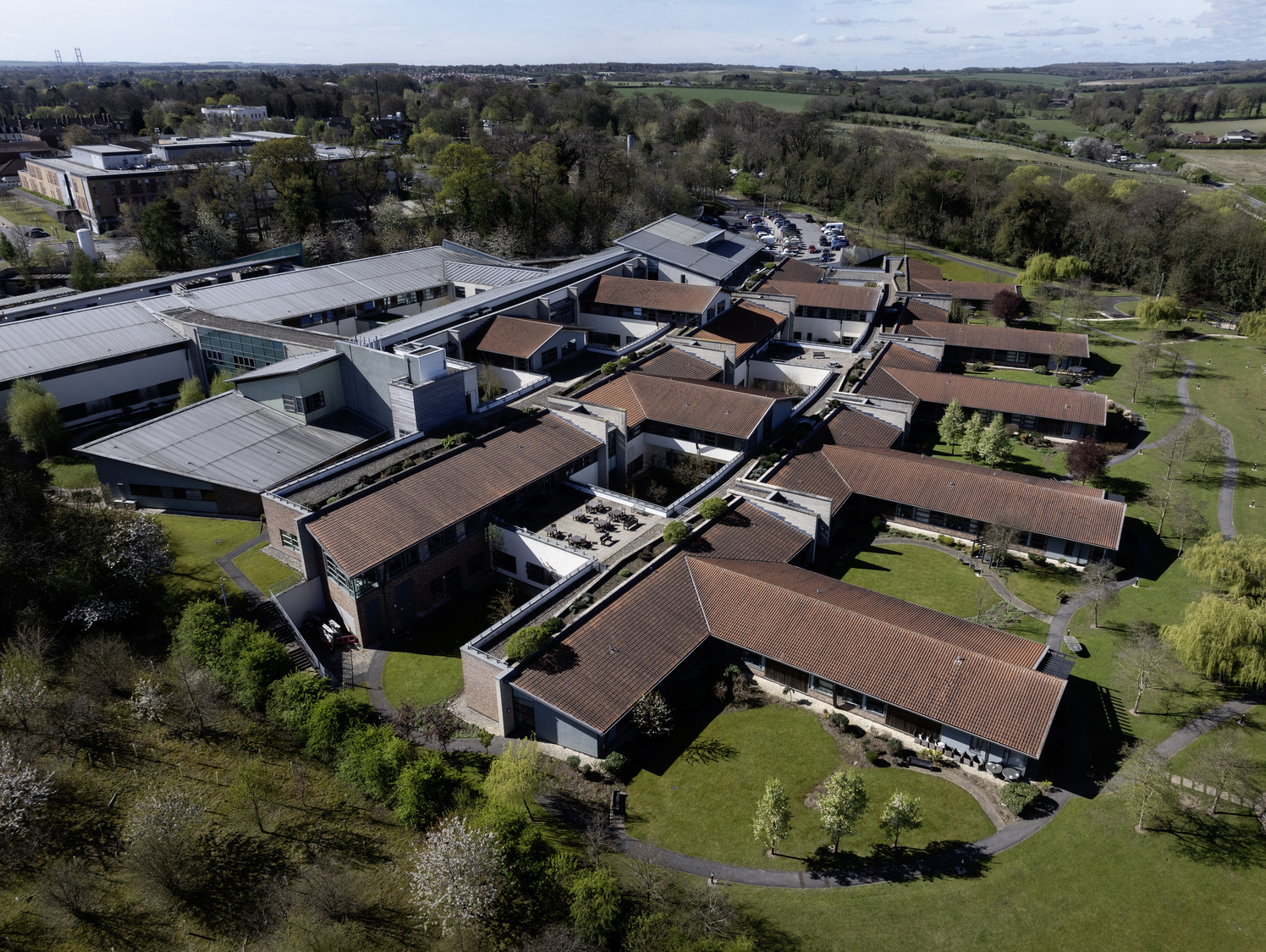
The project lies on the northern edge of the main hospital site, where the land slopes steeply down to reveal expansive views of the surrounding countryside. Because of this typology, the building cascades downhill. This design allows every floor to have direct ground-level access. This strategy not only eases circulation and wayfinding but also allows patients and staff to maintain a strong and continuous connection to the landscape.
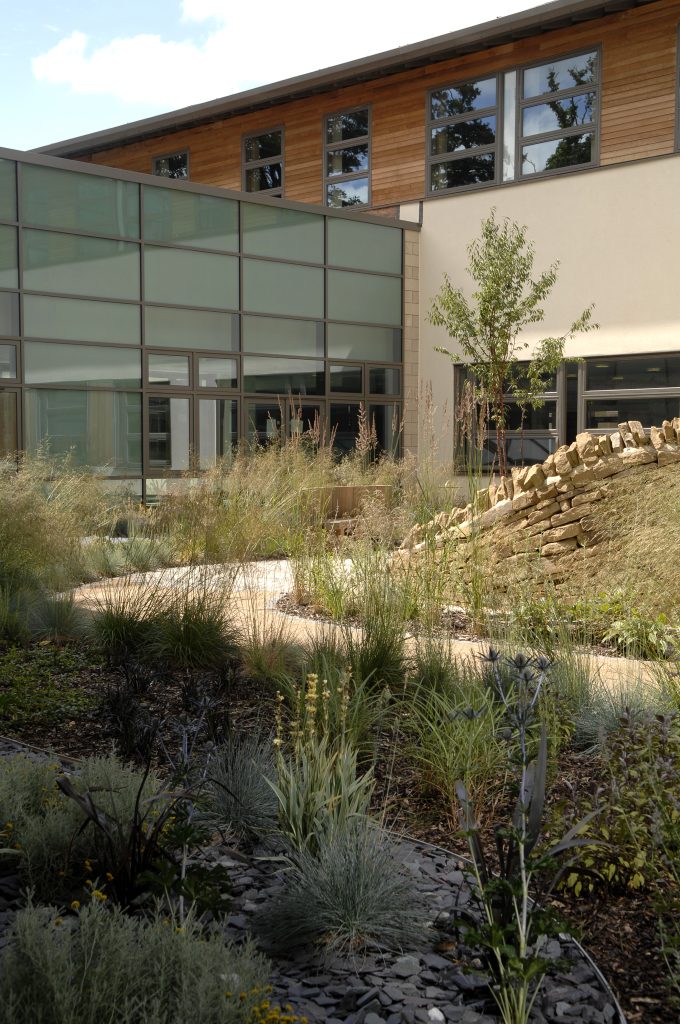
The power that nature has to the healing process is illustrated in this site. The plan is arranged around a series of themed courtyards, each providing distinctive outdoor spaces to inspire, calm and reconnect patients. On the lowest level, where the inpatient wards are located, private courtyards offer secluded gardens that bring light and greenery into patient rooms. This is complemented by panoramic views across the countryside, reinforcing a sense of openness and escape from the clinical environment.
A Human-Centered Approach
The project challenged conventional hospital planning. Typically, Outpatients departments are positioned on lower levels, with wards placed above. Here the model was inverted. Outpatients are located on the main entrance level, which allows easy access for visitors, while academics and Research spaces occupy the upper floor. This decision reserved the lower level for the wards, where patients benefit most from the immediate access to nature, private courtyards and quiet outdoor spaces, all with the vast views of the countryside.
Adding to the views, local artists got involved with the design and a sculpture trail was created along the perimeter of the ward areas. This visual landmark provides an engaging journey for those able to explore it by foot, and it benefits patients, staff and visitors as it can also be seen from the inside. The presence of art and nature together transforms the centre from clinical into an uplifting environment.
Innovation and Sustainability
Responding to the hospital’s specialism, the design team explored innovative solutions for the linear accelerator bunkers. By working with the natural hillside and clay substrata, the requirement for heavily reinforced concrete structures was significantly reduced. This lowered both material use, embodied carbon and allowed the facility to blend more seamlessly into its landscape.
The design also carefully protects the environment around it. This existing aquifer was carefully protected; swales were introduced to attenuate surface water drainage and ecological enhancements were priotised across the hospital site. In partnership with the Woodland Trust, more than 5,000 trees have been planted in the adjacent parkland. Over time, this new woodland will establish itself as a thriving ecological habitat, contributing to biodiversity while creating a calming and restorative viewpoint for patients and visitors.
A Place of Care and Renewal
At every stage, the design of Hull Oncology has been guided by the belief that healthcare environments should care not just for the physical body of the patient, but the whole person. By weaving together clinical excellence with access to nature, art and light, the centre becomes a place that reassures and restores. Patients, staff and visitors alike benefit from a design rooted in human needs and enriched by its connection to place.
This project demonstrates how architecture can transform healthcare by creating environments that nurture wellbeing as much as they deliver treatment. Set within its hillside landscape and framed by woodland, Hull Oncology stands as a model of Healthcare, one that places people at its heart.