Sustainable Architecture: Explore the latest in sustainable architecture, eco-friendly building materials, and modern design trends shaping urban and residential spaces in 2026.
Introduction
Sustainable architecture has evolved beyond a mere trend—it’s now a movement reshaping the way architects, designers, and homeowners approach modern construction. As global awareness of climate change grows, eco-friendly building materials, energy-efficient design, and green urban planning are at the forefront of architecture conversations in 2026. For readers of leading architecture magazines and Luxury Property magazines, understanding the fusion of aesthetics, functionality, and sustainability is essential to staying ahead in the design world.
The Rise of Eco-Friendly Building Materials
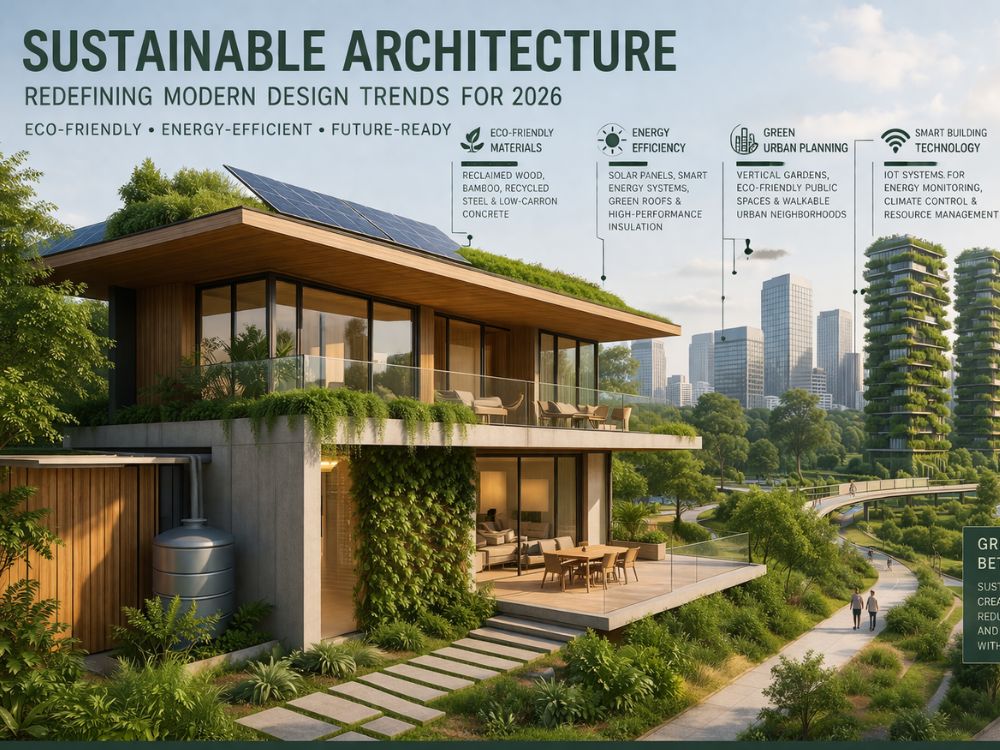
In contemporary architecture, selecting the right materials goes beyond aesthetics; it’s about creating buildings that honor the environment. Sustainable architecture emphasizes reclaimed wood, bamboo flooring, low-carbon concrete, and recycled steel, reducing environmental impact while maintaining long-lasting beauty. These materials are increasingly highlighted in Luxury Property magazines, as they appear in high-end homes, urban residential complexes, and commercial architecture projects, reflecting a commitment to modern design that prioritizes sustainability.
Energy Efficiency: The Backbone of Modern Sustainable Architecture
Energy-efficient design has become a hallmark of contemporary architecture. From passive solar strategies to high-performance insulation, architects are blending innovation with environmental responsibility. Modern homes now feature solar panels, smart home energy systems, and green roofs to minimize energy consumption. Architecture magazine readers, in particular, are interested in net-zero energy homes—where buildings produce as much energy as they consume—showcasing a balance between modern luxury and environmental stewardship.
Green Urban Planning and the Future of Cities
Sustainable architecture extends beyond individual buildings to the urban landscape. Cities around the world are embracing green urban planning, integrating vertical gardens, eco-friendly public spaces, and walkable neighborhoods. This holistic approach promotes healthier lifestyles while reducing the urban carbon footprint. Luxury Property magazine features frequently highlight biophilic urban designs, connecting city dwellers to nature while maintaining sleek, modern architectural aesthetics.
Modern Design Trends in Sustainable Architecture
For 2026, several trends define the modern architecture scene:
- Minimalist Sustainable Design: Clean lines, open spaces, and eco-conscious materials.
- Adaptive Reuse Projects: Transforming older structures into energy-efficient modern spaces.
- Smart Building Technology: IoT integration for energy monitoring, climate control, and resource management.
- Passive Design Strategies: Utilizing natural light, airflow, and orientation to reduce energy use.
These trends reflect a shift toward architecture that harmonizes style with sustainability, inspiring readers of both architecture magazines and Luxury Property magazines seeking ideas for residential and commercial projects.
Conclusion
Sustainable architecture is more than a trend—it is the blueprint for the future of modern design. From energy-efficient homes to eco-conscious urban spaces, architects are redefining luxury, functionality, and environmental responsibility. By embracing green materials, smart technology, and forward-thinking design trends, readers of Architecture magazines and Luxury Property magazines can stay informed and inspired as the world of architecture continues to evolve in 2026.