Black & White, Bold & Precise
An Article By: Paul O’Connell Photography
Paul O’Connell’s photography reveals how modern architecture can be seen through stark lines, reflective glass, and commanding spatial presence.
The skyline speaks in angles now. Modern architecture isn’t just structural anymore, it’s how buildings assert themselves. Sharp geometric forms, reflective surfaces, and extreme perspectives challenge the way we see space. This represents a real shift in how architects and photographers collaborate. Photography has become the primary language through which architecture gets understood. It transforms buildings into visual statements, extending their impact far beyond the physical site.
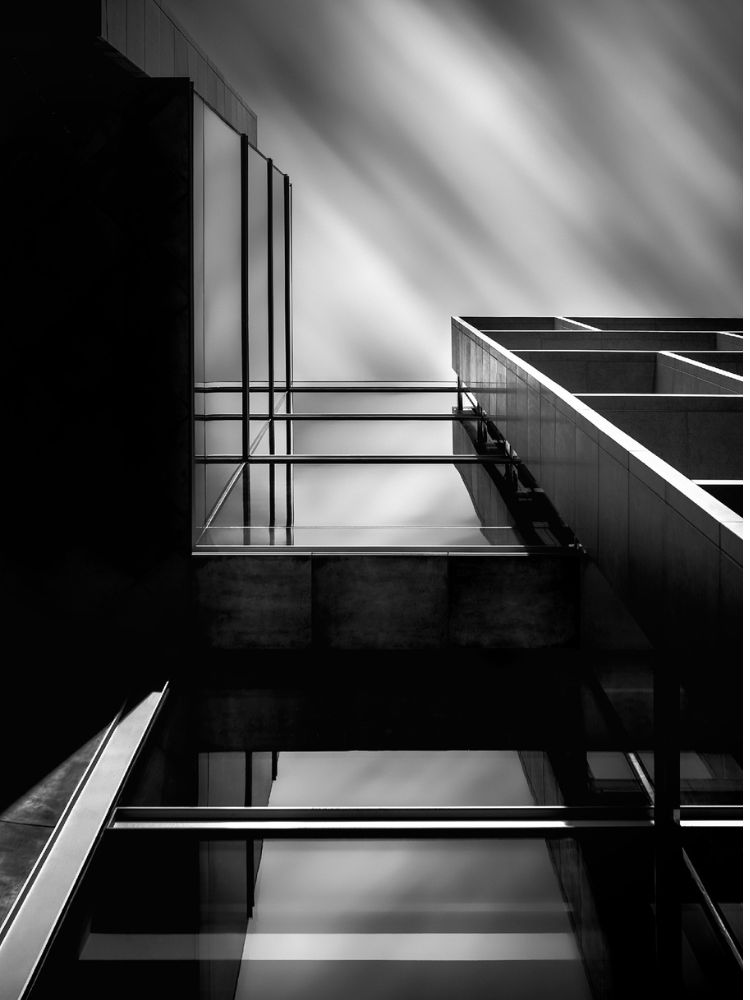
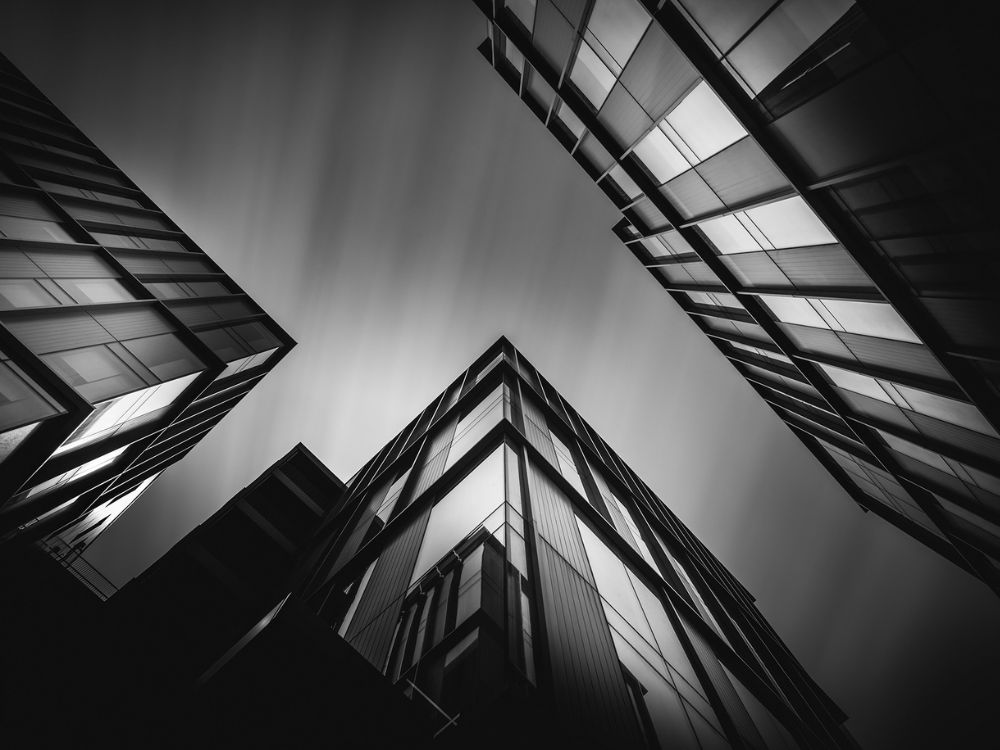
Paul O’Connell shoots from ground level looking up, making buildings feel massive and inevitable. There’s nothing accidental about it—he’s deliberately showing you how contemporary architects actually think about their work. The thing is, architects now design buildings expecting them to be photographed. They’re thinking about how light will wrap around a facade, which angles will make an edge pop, how the proportions will read in a frame. It’s become as important as how the building actually functions. In many cases, more important.
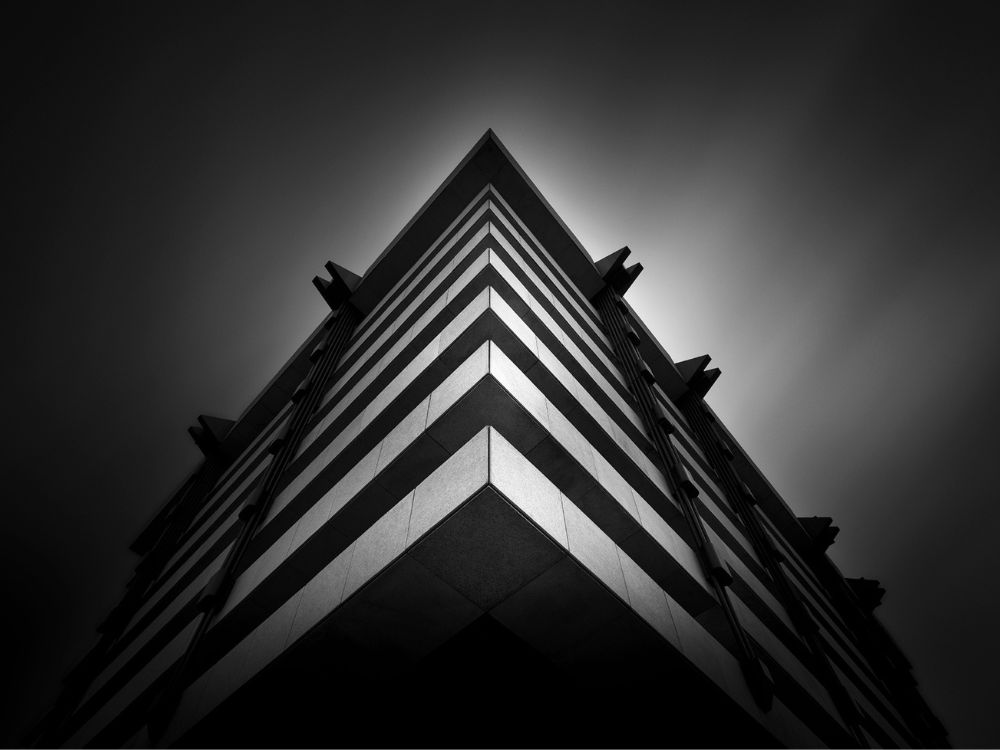
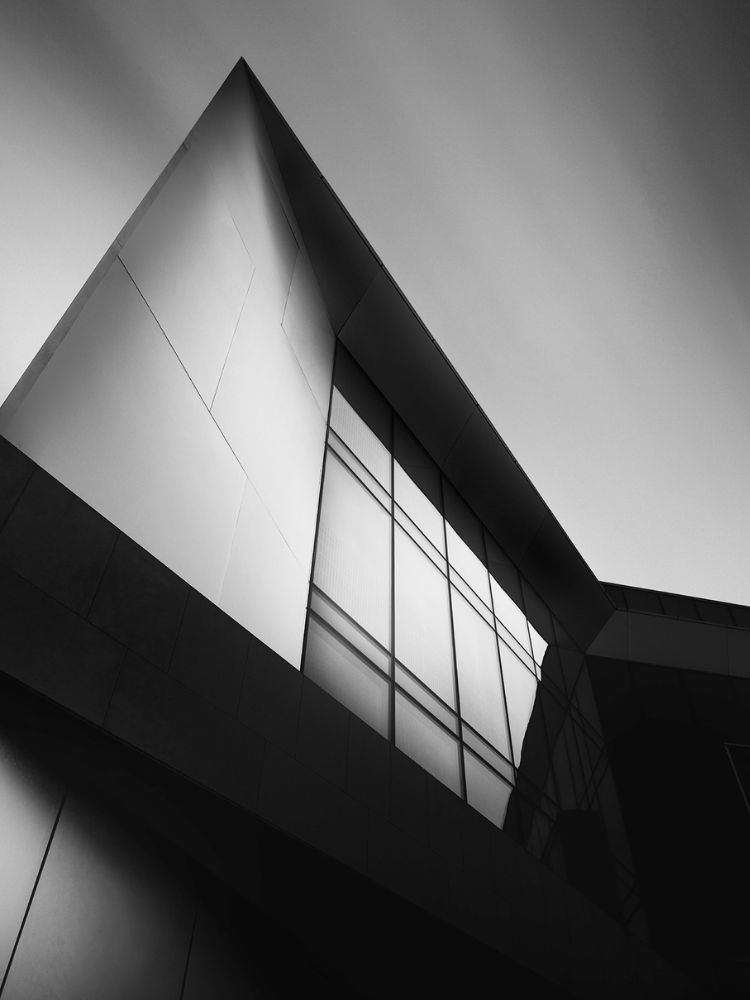
Look at any new office tower or institutional building and you’ll see the same shapes: chevrons, stacked rectangles, triangular cutouts. It’s not random. Repetition makes things feel solid and trustworthy. Lines that come together pull your eye up. Asymmetry keeps it from feeling boring. In corporate architecture, this stuff matters. It’s how a building says “we’re modern and ambitious” without saying anything at all. Every new development is fighting for attention, so architects use these geometric moves to make their buildings stand out and feel strong in the skyline.
Black and white photography strips everything down to what counts: shape, size, light, and dark. High-contrast images turn a simple photo into something that makes you think. Light works like material here. Reflective glass bounces light around in ways you don’t expect. Shadows carve out the geometry cleanly. The sky becomes part of the picture instead of just background. The building stops being concrete and steel and becomes pure shape.
Modern buildings are built with precision. Every line, every proportion, every material choice matters. Some of this comes from the push toward efficiency and sustainability, but a lot of it is just about making things look clean and strong. Buildings have to work and look good at the same time. They need to pass inspections and follow rules, but they also need to tell you something about who built them and what they stand for.
Architects and photographers work together now, and it’s become essential. Paul O’Connell’s photos show how the right image can make a building matter more, reaching people far beyond the actual structure. This partnership actually shapes how buildings get designed. Architects think about how light will hit the walls and which views will make the building look its best. The building and its photos become one thing, you can’t separate them
Contemporary architectural photography isn’t just documentation. It interprets and it reveals what a building says to the viewer. Often, the photograph shapes how people understand a building more than the physical experience does.
Vertical lines in architectural photos aren’t just about technical skill. They show how modern architecture approaches form and function. Through photographers like Paul O’Connell, buildings tell stories, showing innovation and precision in ways that speak to both architects and regular people.
Architecture and photography go hand in hand now. A building is both a physical thing and a visual story. You need both to really get it. The skyline today is how we express what we value in design and how we think buildings should look.