
As robotaxis hit London’s streets and drones reshape how we survey our heritage, the planning system risks being left behind
An Article By: Shoshannah Rowland-Stone, Planner, Boyer (London & South East)
Feature Provided By: PNPR
London has long prided itself on being a city that’s bold, adaptive and forward-thinking. However, as autonomous vehicles edge towards our streets and drones reshape how we see our built environment, is our planning system keeping pace with the technology arriving at its doorstep?
Driverless cars: from San Francisco to the streets of London
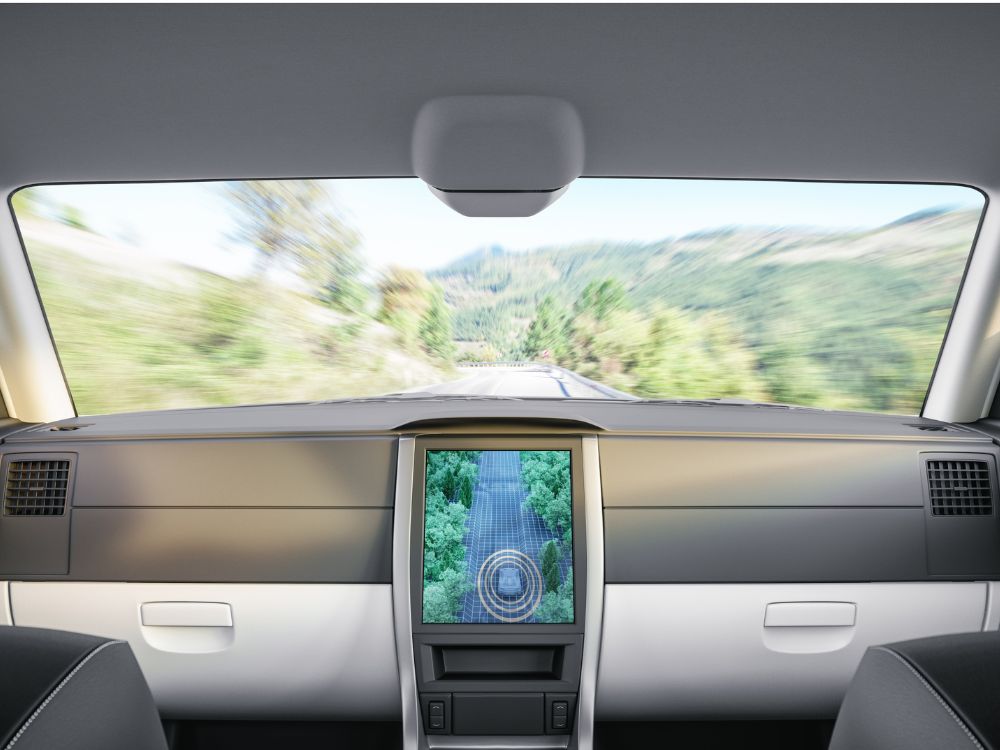
London is set to become one of the first European cities to host a commercial robotaxi service. Waymo – owned by Google’s parent company Alphabet Inc. and making its first commercial venture outside the US – has confirmed plans to open its service to riders in London, with full commercial operations targeted for the end of 2026. Around 24 of its Jaguar I-PACE vehicles are already gathering data across 19 London boroughs. Just last week, I passed one of these vehicles navigating Tower Bridge Road, a sign that the mapping and data-gathering phase is well underway. Subject to regulatory approval, Londoners will be able to hail a fully driverless cab through an app as early as September 2026.
The Automated Vehicles Act 2024 establishes – in the government’s own words – one of the most comprehensive legal frameworks for self-driving vehicles anywhere in the world. In June 2025, Lilian Greenwood, Minister for Local Transport, confirmed that commercial pilots could begin from 2026, a year ahead of schedule. The government estimates the sector could contribute £42bn to the UK economy and create up to 38,000 jobs by 2035. While the ambition is clear, the infrastructure is less so.
What this means for planning
Autonomous vehicles are unlikely to behave like private cars, and that distinction matters for how we plan streets and developments. Rather than parking, these vehicles are likely to circulate, returning to charging and cleaning facilities before getting back on the road. If that model takes hold, the case for building large amounts of parking into new developments weakens considerably. At the same time, pressure on kerb space for pick-up and drop-off is expected to increase; something that current transport assessments are simply not designed to address.
However, it also shifts pressure elsewhere in the system. In particular, demand for land to accommodate vehicle storage, charging and maintenance facilities could increase, raising important questions about where these depots are located and how they are planned within urban areas. In dense urban areas already under enormous development pressure, dedicating land to autonomous vehicle infrastructure won’t be straightforward. And if personal car ownership does fall as a result of robotaxi adoption, planning could justify significantly lower car-parking standards in new developments, with knock-on implications for how we design residential schemes, student accommodation and mixed-use projects.
There’s a more fundamental question the planning profession needs to sit with, too: will autonomous taxis actually reduce the number of cars on London’s streets or just change who owns them? As it stands, research into car restriction policies has shown that they tend to only result in marginal changes, and the mechanism best understood to meaningfully shift patterns in the traffic mode split is “improving the planning of urban roads, increasing the public transport infrastructure and increasing residents’ acceptance of public transport.” Would introducing autonomous taxis really be enough to tick those boxes, reduce car ownership across the capital and deliver those all-too-often-cited environmental improvements?
London’s entire transport strategy is built around reducing car dependency. If autonomous fleets simply swap privately-owned vehicles for commercially-operated ones at similar volumes, the net benefit to congestion and public space could be modest at best. At worst, autonomous fleets could multiply the number of vehicles on the road if car ownership proves resilient. However, if robotaxi adoption genuinely erodes personal car ownership, the implications for how we plan and design cities could be transformative. We don’t yet know which way it goes, and that uncertainty alone should be prompting more active engagement from planners than we are currently seeing.
Yet despite all of this, I’ve not encountered a single planning application in London where any of this has featured as a material consideration. Policy, it seems, has simply not noticed.
A cautionary tale from cycle parking
There’s a useful precedent closer to home. London’s cycle parking standards under the London Plan have long set ambitious minimum requirements, mandating close to one secured indoor space per resident and applying similar logic to student accommodation, where the result has sometimes been an entire basement given over to bike storage.
In practice, students typically hire. They use Lime and don’t tend to own bikes. To their credit, planning authorities are now adapting. In October 2025, the Mayor of London and the government proposed to formally reduce cycle parking requirements at residential developments, citing the rise of dockless hire, and allowing developers to make financial contributions in lieu of on-site storage. It’s a sensible and welcome recalibration, and a good example of policy evolving to reflect how people actually travel.
Autonomous vehicles present the same challenge, but on a far greater scale. The question is whether we can get ahead this time, embedding flexibility into transport assessments and street design now, rather than retrofitting policy to a technology that’s already arrived.
Drones and urban heritage
While autonomous vehicles have dominated the headlines, a less visible transformation is already reshaping how we survey and understand our built heritage. Drone technology has become an increasingly valuable tool across the heritage sector. Historic England has long used drone-acquired imagery, and the applications have expanded considerably; from photogrammetric surveys of listed buildings to multispectral analysis capable of detecting sub-surface archaeological features entirely invisible from the ground.
For planners working on sites with heritage sensitivities, this is increasingly relevant. For instance, where a greenfield site falls within a zone of archaeological potential, a drone survey can provide detailed, non-invasive data before a spade even enters the ground, informing development parameters and, in some cases, saving significant time and cost further down the line.
However, drones are becoming more than a survey tool for the built environment. The Civil Aviation Authority is actively developing regulatory frameworks for vertiports and urban air mobility operations – dedicated infrastructure for drones and electric vertical take-off and landing aircraft that will need to be sited, designed and consented. When planning applications for that infrastructure start arriving – and they will – they’ll fall squarely within the remit of the planning system.
Planning needs to lead, not follow
With the government having just concluded a major consultation on NPPF reforms and the Planning and Infrastructure Act 2025 now on the statute book, the immediate legislative window may have passed, but the case for embedding autonomous vehicles and urban air mobility into national planning policy is only going to get stronger.
The technology is already here: autonomous vehicles are mapping London’s streets and drones are quietly reshaping how we understand the built environment. Yet planning policy still largely treats both as if they belong to the future. If London wants to remain the bold, forward-thinking city it prides itself on being, planning needs to start anticipating these changes rather than reacting once they have already arrived, meeting the technology where it already is, on our streets and above them.
As autonomous vehicles map London’s streets and drone technology reshapes how we assess heritage and development, this article underscores the need for the capital’s planning system to evolve with the wider built environment network, ensuring future policy keeps pace with the rapid technological change already transforming the city.