The National Portrait Gallery
The ‘Inspiring People’ project was a multi-million-pound remodelling of the National Portrait Gallery, aimed at broadening the collection on display and enhancing the storytelling power of portraiture. As interpretation and permanent exhibition designers across 48 galleries, Nissen Richards Studio’s role was to reconfigure the display within the Gallery to improve accessibility, inclusion, and visitor engagement.
The practice’s approach focused on creating an inclusive and welcoming environment, allowing visitors to connect with the portraits and the stories they tell. The goal was to craft a gallery people could relate to, fostering engagement through a reimagined visitor experience that highlighted both historical and contemporary figures.
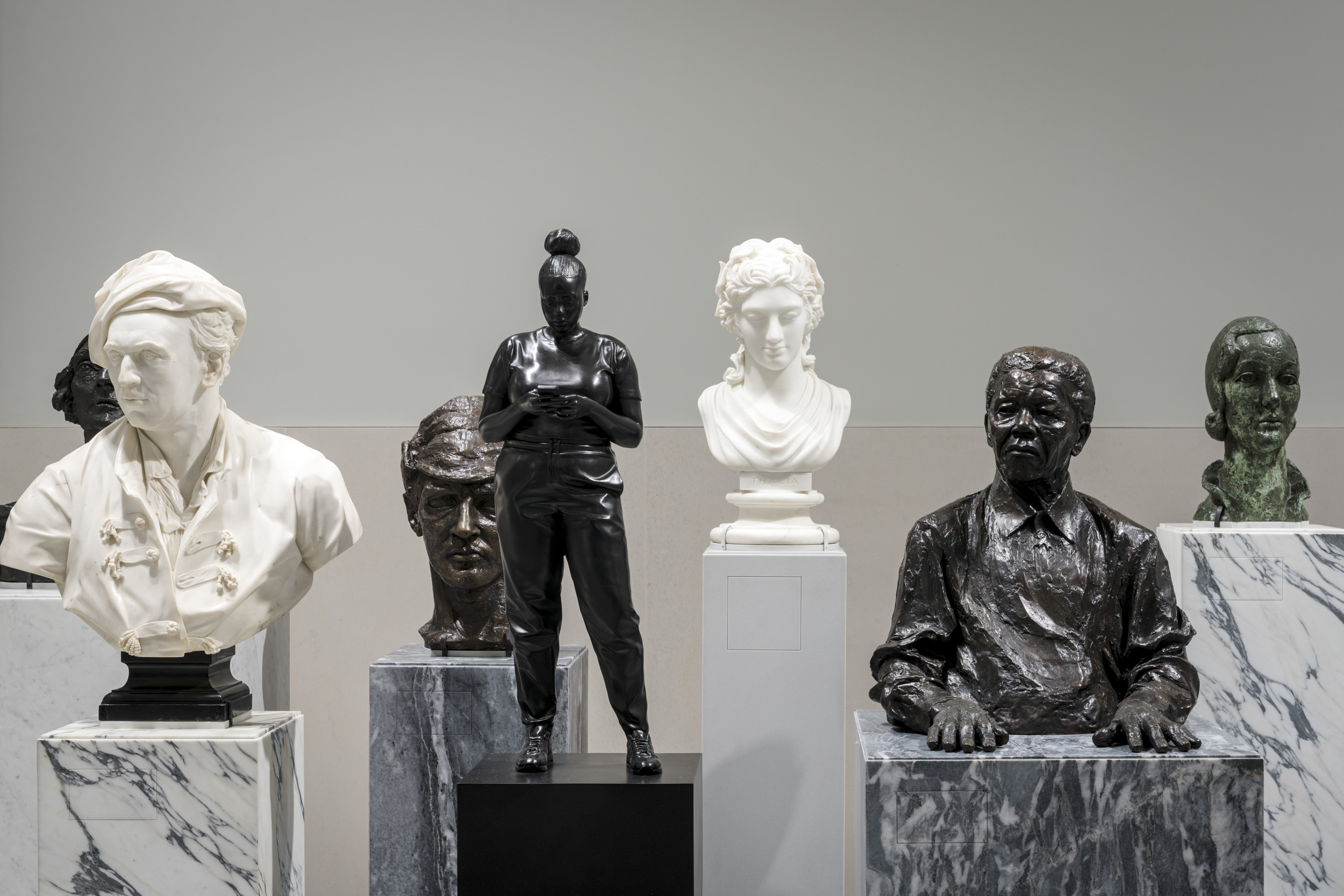
Working closely with the curatorial team, the Nissen Richards Studio team rethought the display strategy, integrating a wider range of narratives into the collection. At the new entrance, a series of sculptures raised on plinths greets visitors at eye level, providing immediate connection with significant figures from today and from history. This arrangement established an inclusive and engaging entry point, reinforcing the gallery’s role as a space for all.
In the ticketing area, a dynamic film installation across the full height of the back wall was designed to encourage movement through the space, drawing visitors toward the escalator and previewing key collection highlights. The gallery layout was designed to allow for multiple routes, depending on visitors’ interests and available time. The chronological journey begins at the top, leading visitors through British history from the Tudor period to the present day.
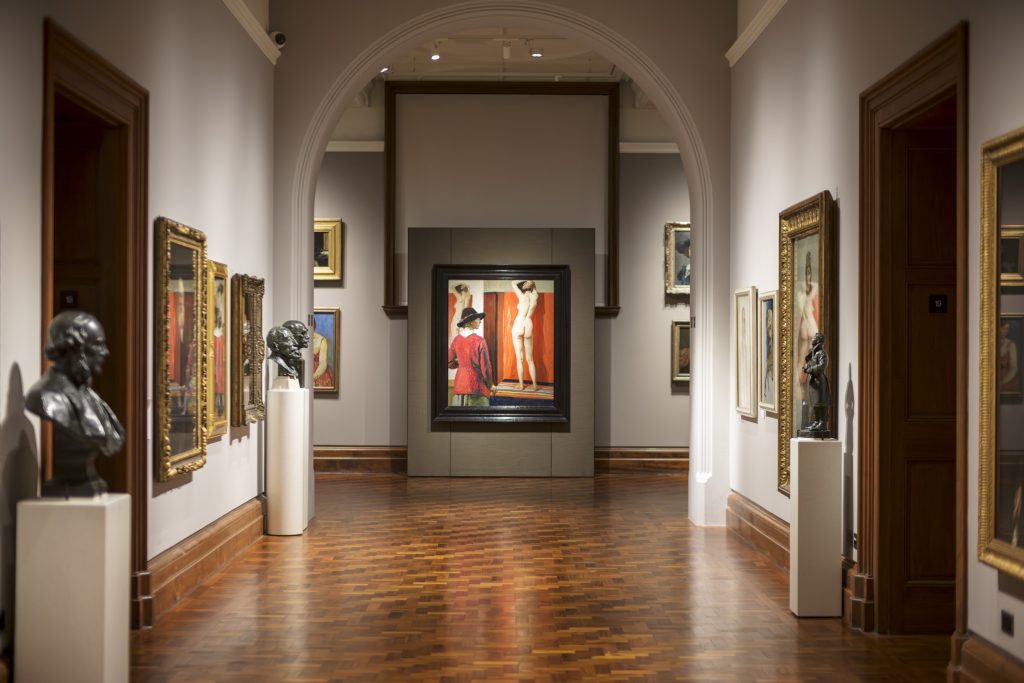
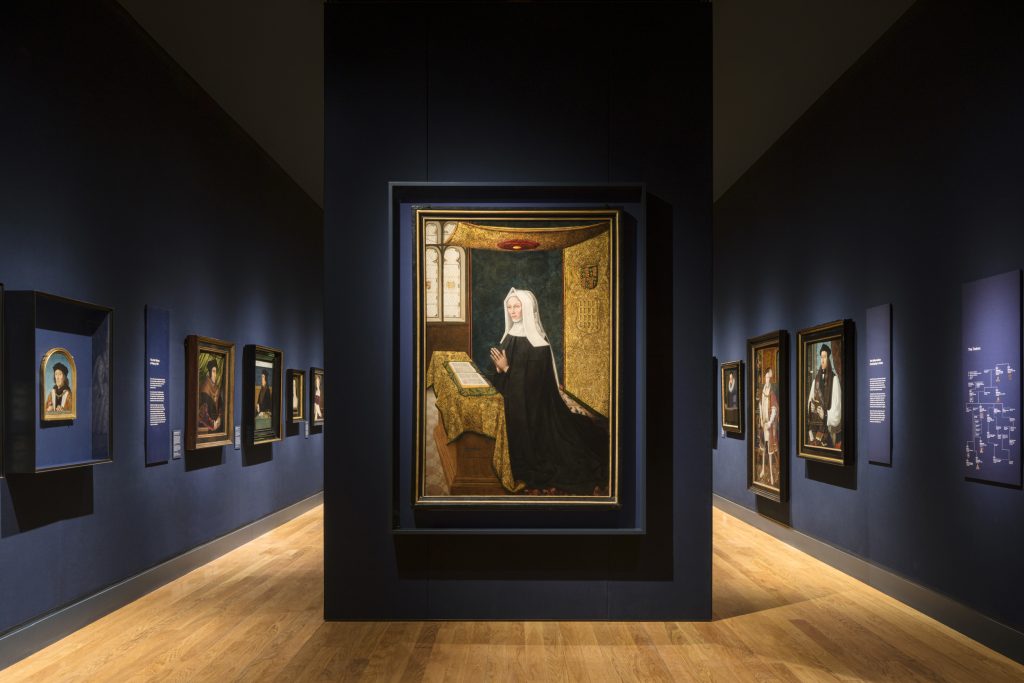
A key aspect of the new wayfinding and visitor navigation plan was the strategic use of colour. Gradual shifts in colour along longer vistas indicate movement through time, while more abrupt changes signal significant jumps between historical periods. This intuitive design approach allows visitors to move naturally through the galleries, reducing reliance on signage and enabling a more immersive experience.
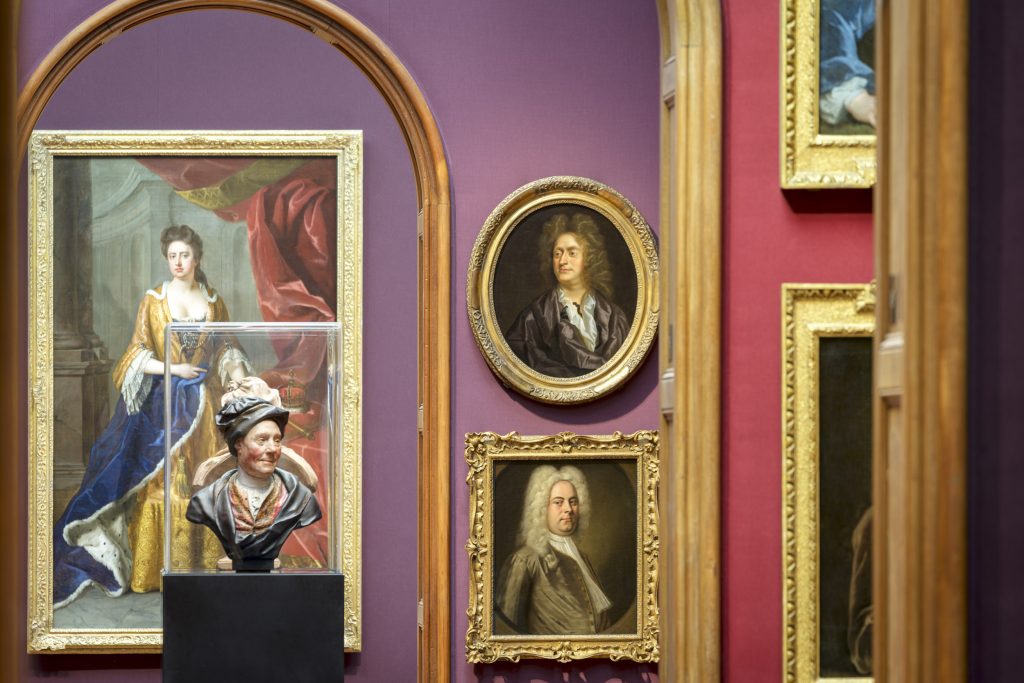
The material palette was tailored to complement the artwork while reinforcing historical context. In the older galleries, heavy wool fabric in bespoke, richly pigmented colours was used to line the walls, providing a sense of depth and absorbing light. These custom fabrics were developed to give a sense of time and also to enhance the colours of the collection. In contrast, the contemporary galleries feature a more neutral palette as a backdrop, with painted walls and bold accent colours highlighting themes or moments from the collection.
Interactive and multimedia elements enhance visitor engagement. Audiovisual content was embedded into bespoke interpretation panels and display furniture, providing additional layers of storytelling without overwhelming the physical space. These interactive features offer alternative ways to engage with the collection, accommodating a range of learning styles and accessibility needs.
A commitment to accessibility informed every aspect of the project, addressing intellectual, physical, and emotional barriers. By offering multiple routes into the content—beyond traditional text-based interpretation—we ensured the gallery experience was engaging and inclusive for all audiences, balancing immersive storytelling, historical context, and personal discovery.
We are proud to feature and promote in our architecture magazine: The National Portrait Gallery ‘Inspiring People’ project