Designing Above The Tracks
A Project By: Suttonca
Location: Stratford, London
As developable land becomes increasingly scarce across London, the capital’s next generation of homes is being delivered on sites once considered too difficult, constrained or complex to unlock — a growing reality across the built environment.
Rondo Stratford marks architecture practice Suttonca’s first completed Build-to-Rent development for an institutional client, demonstrating the practice’s ability to unlock such challenging urban sites.
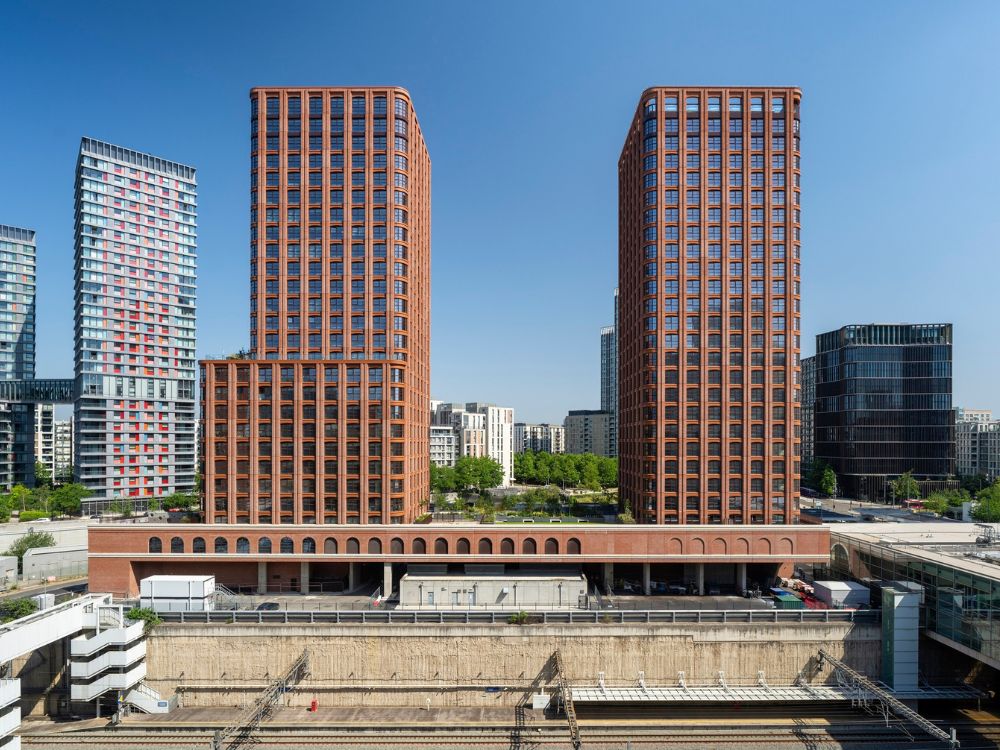
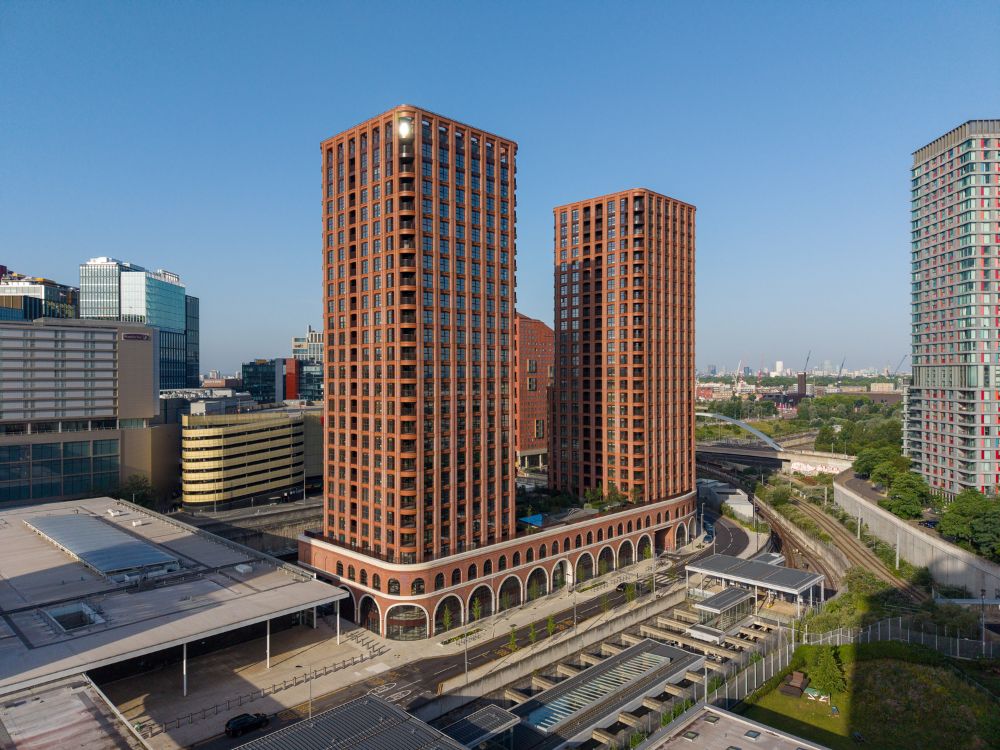
Developed by Telford Homes and owned by L&G, Rondo Stratford transforms one of the last undeveloped remnants of the Stratford City masterplan into 380 new homes alongside retail, workspace, community amenities and significant public realm improvements — a meaningful addition to the built environment.
Positioned between Stratford International Station, the DLR and Queen Elizabeth Olympic Park, the development was formerly a constrained site dominated by transport and utility infrastructure.
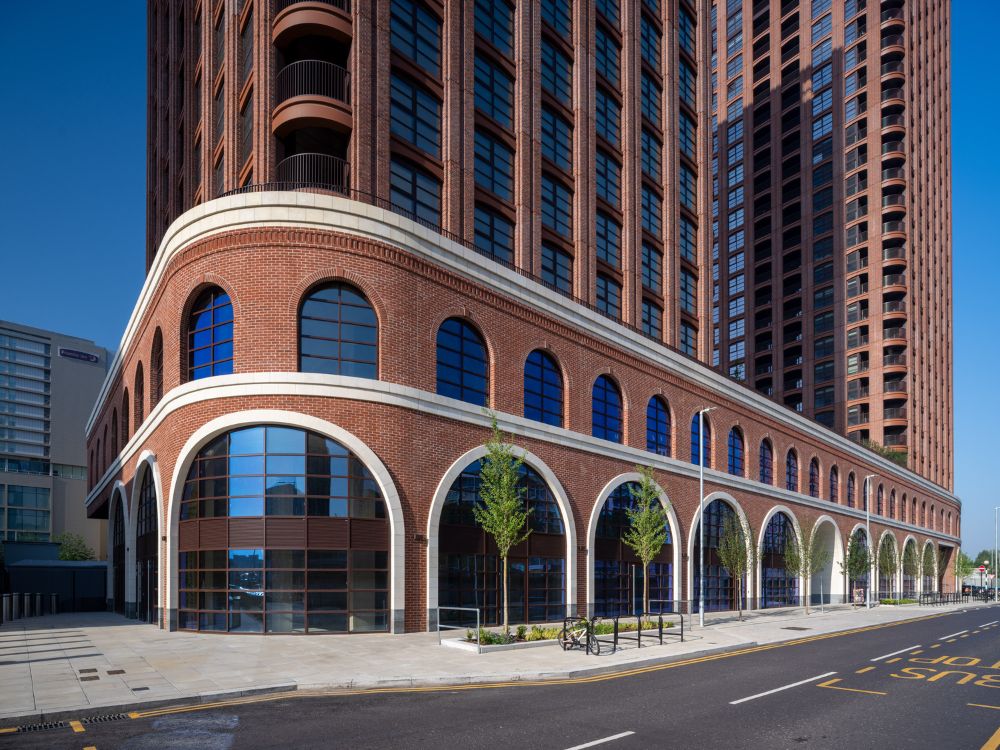
Today it comprises two residential towers rising from a three-storey podium that accommodates a complex arrangement of retained and re-provided infrastructure, including a bus layover, taxi facilities and substation, while also safeguarding future international station expansion requirements. Rather than allowing these constraints to dictate a purely technical solution, the design team sought inspiration in Stratford’s railway heritage and industrial past. The result is a contemporary interpretation of the Victorian railway viaduct: robust brick architecture that bridges over the site’s challenges while creating a strong civic presence at street level — a design approach that resonates across the built environment.
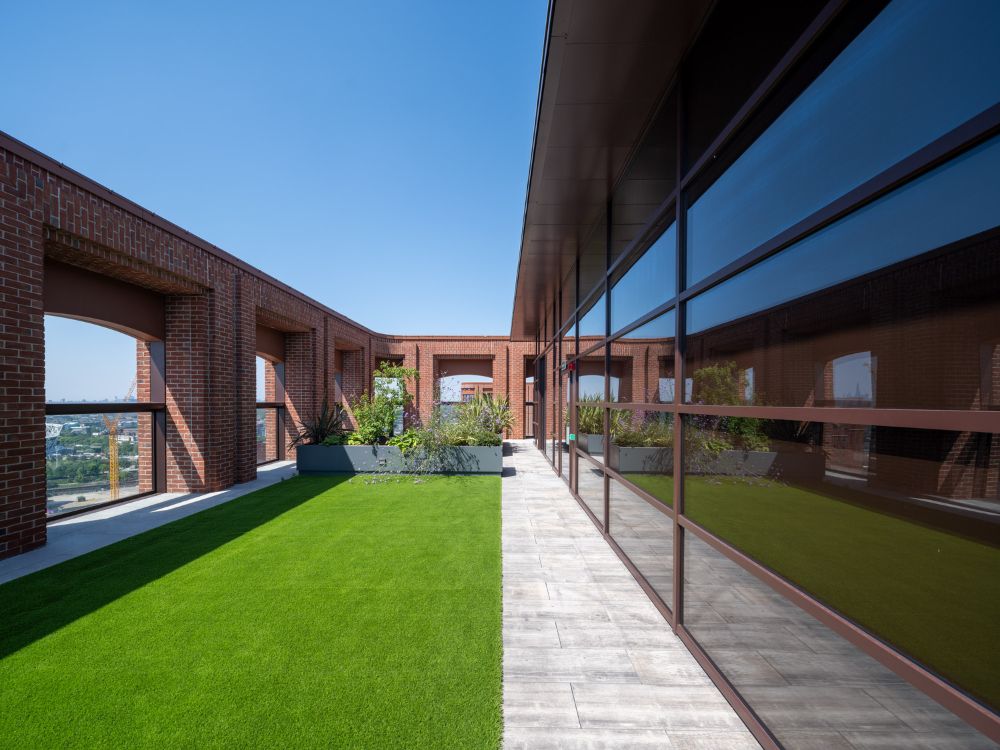
Designed with the expectations of modern renters in mind, Rondo Stratford places experience at the heart of the development. Alongside high-quality homes, residents benefit from a comprehensive suite of amenities including co-working spaces, resident lounges, a private dining suite, cinema room, gym and wellness facilities, podium gardens and panoramic roof terraces overlooking the London skyline.
Chris Sutton, founder at Suttonca comments:
“Rondo Stratford demonstrates the value that can be created when design engages positively with complexity rather than trying to avoid it. The site was constrained by transport infrastructure, operational requirements and technical challenges which could have easily limited its potential. However, through persistence, innovation and a rigorous design review process, we knew there was an opportunity to create a genuinely distinctive place to live with a focus on resident experience.
“For long-term institutional owners such as Legal & General, that design translates into a more resilient and attractive asset – one that supports community, encourages customer loyalty and creates lasting value over time.”
From a design perspective, the brickwork is fundamental to the project’s success. The material provides a direct connection to the railway structures that once defined Stratford and informed the growth of East London. The podium is articulated as a sequence of monumental arches that follow the curve of International Way, creating a memorable and highly active frontage. These generously proportioned brick arches establish a human scale along the street, accommodating retail, workspace and community uses while concealing the complex infrastructure that remains operational beneath and behind the development.
Brick’s durability is a significant advantage. With a lifespan often measured in centuries rather than decades, high-quality brickwork requires minimal maintenance, reducing the need for replacement materials and helping to lower whole-life carbon impacts over the lifetime of a building — an increasingly important consideration across the built environment.
The project anchors Stratford’s railway legacy and creates a lasting piece of city that is simultaneously contextual, resilient, and unmistakably contemporary, providing an aspirational living environment for those who live there — and a thoughtful contribution to the built environment.